
E-invoicing
UAE e-invoicing, implemented before your deadline.
The UAE is moving business invoicing to a structured electronic format exchanged through accredited service providers. We assess your systems, help you choose a provider and test the rollout, so invoicing carries on without a gap when your phase goes live.
- Go-live for revenue of AED 50 million or more
- Jan 2027
- Go-live for all other businesses
- Jul 2027
- Network model behind the UAE system
- Peppol

Overview
A PDF will no longer count as an invoice.
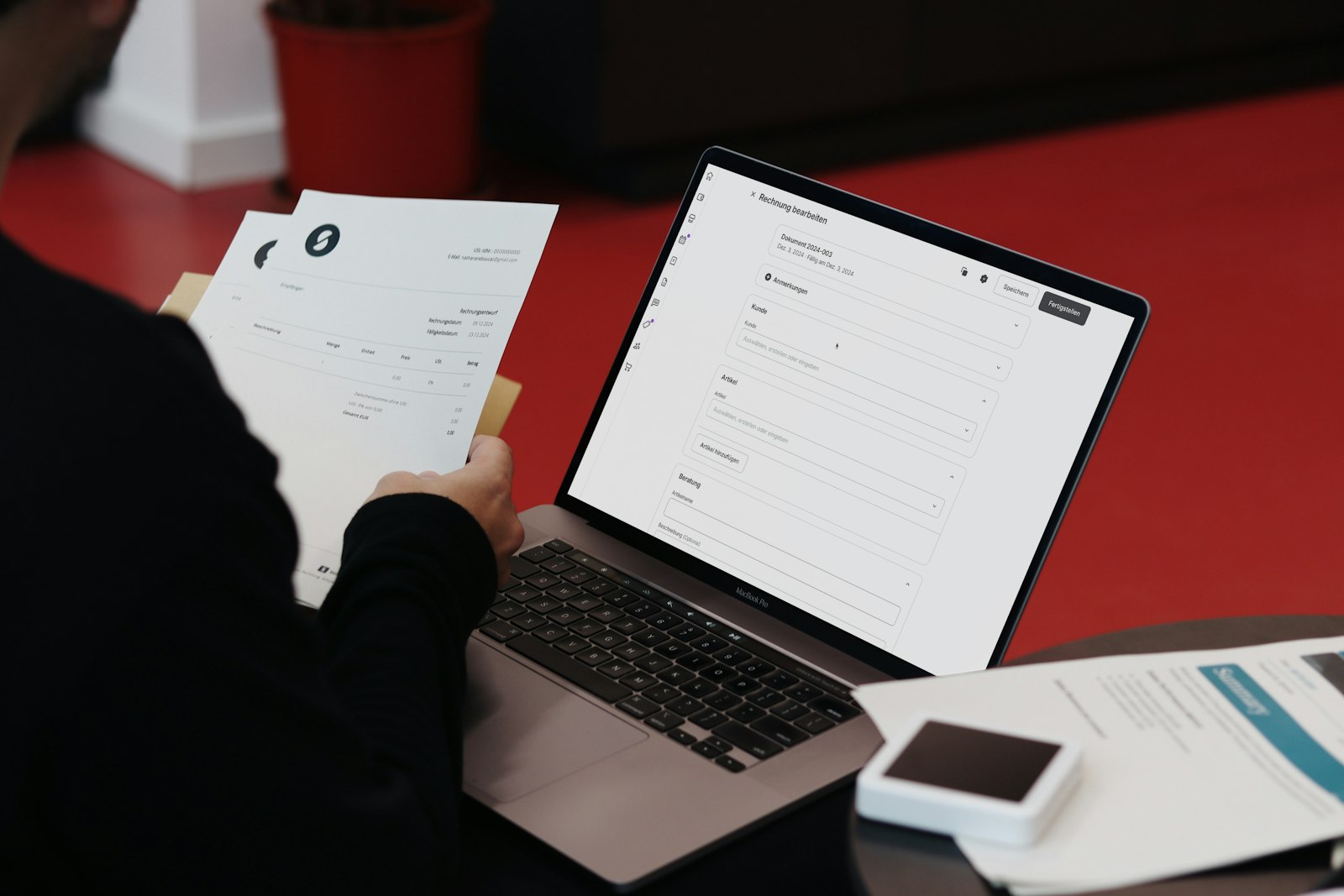
Under the Ministry of Finance programme, an e-invoice is structured data, not a PDF or a scan. Your system sends the invoice to an Accredited Service Provider, which validates it, delivers it to your customer’s provider and reports the tax data to the Federal Tax Authority. The model follows the international Peppol network.
Business to business and business to government transactions are in scope first. Each business must appoint an accredited provider before its date. The work is mostly about data: customer tax numbers, item codes, tax categories and the fields your current system does not capture yet.
- Gap analysis against the UAE data dictionary
- Independent help choosing a service provider
- Invoice, credit note and self-billing flows tested
- Finance team trained before go-live
What is included
How we get you e-invoicing ready.
A short project with a clear finish line.
-
Readiness assessment
A review of your invoicing process, systems and master data against the mandatory fields.
-
Provider selection
Shortlisting Accredited Service Providers that fit your ERP, volumes and budget, with an independent recommendation.
-
Data and ERP mapping
Mapping your invoice data to the UAE format and fixing customer, item and tax code records.
-
Testing and go-live
End-to-end test invoices, error handling, and support through the first live weeks.
-
Team training
Practical training for finance and sales staff on what changes day to day.
-
VAT alignment
Making sure e-invoice data and VAT returns agree, because the authority will see both.
Good to know
The UAE e-invoicing timeline.
Dates announced by the Ministry of Finance. We confirm the current position for your business before planning.
-
July 2026
Pilot phase for a group of selected taxpayers, with voluntary adoption open to others.
-
January 2027
Mandatory for businesses with annual revenue of AED 50 million or more. Provider to be appointed by 31 July 2026.
-
July 2027
Mandatory for businesses with revenue below AED 50 million. Provider to be appointed by 31 March 2027.
-
October 2027
Mandatory for government entities.

Getting started
What we review in the assessment.
A few hours of your finance team’s time is usually enough.
- Sample sales invoices, credit notes and any self-billed invoices
- Your accounting or ERP system and how invoices are created
- Customer master data, including tax registration numbers
- Item and service lists with VAT treatment
- Monthly invoice volumes and any integrations with other systems
- Your latest VAT returns
How we work
From first call to signed report in four steps.
-
Free consultation
A 20 minute call or WhatsApp chat about your company, your licence and what is due.
Day 1 -
Fixed-fee proposal
A written scope, timeline and price. No hourly billing and no surprises later.
Within 24 hours -
Fieldwork
Share records by secure upload. We test, reconcile and keep you posted on every open point.
Agreed timeline -
Signed report
Your signed audit report or filed return, delivered in the format your authority requires.
Before your deadline
E-invoicing FAQ
Questions about e-invoicing.

Have a question about your own company? An advisor replies the same working day.
Ask on WhatsApp
What is e-invoicing in the UAE?
It is the exchange of invoices as structured electronic data between the seller’s and the buyer’s Accredited Service Providers, with tax data reported to the Federal Tax Authority. PDFs, scans and paper invoices do not qualify.
When does e-invoicing become mandatory?
The rollout is phased. Businesses with revenue of AED 50 million or more go live in January 2027, other businesses in July 2027 and government entities in October 2027. A pilot phase was scheduled from July 2026.
Does e-invoicing apply to B2C sales?
The first phases cover business to business and business to government transactions. Business to consumer transactions are outside the initial scope.
What is an Accredited Service Provider?
A technology company approved by the Ministry of Finance to validate, exchange and report e-invoices. Every business in scope must appoint one. We help you compare providers but are independent of them.
Do I need to replace my accounting software?
Usually not. Most modern accounting and ERP systems can connect to a provider. The real work is making sure your system captures all mandatory fields and that your master data is clean.
Related services
Often needed alongside this.
-
 Service
Corporate tax & VAT
Registration, returns and advisory for UAE corporate tax, VAT and Pillar Two, so every filing reaches the Federal Tax Authority correct and on time.
-
 Service
Accounting & bookkeeping
Monthly bookkeeping and IFRS financial statements kept audit-ready all year, so year end is a review and not a rescue.
-
 Service
Business advisory
Feasibility studies, valuations, budgets and restructuring advice from people who read your numbers every day.

Free consultation
Tell us what is due. We will tell you what it takes.
Send a few details and an advisor will call you back within one working day with next steps and a fixed quote. No obligation.
- Call+971 52 202 3984
- WhatsAppChat with an advisor
- Emailadvisor@ashfordmc.com
- OfficeAl Shafar Investment Building 121, Al Quoz Industrial Area 1, Dubai
- HoursSaturday to Thursday, 9:00 AM to 6:00 PM